Top 10 Gadget Trends to Watch in 2025: Shaping the Future of Tech & Style
Discover the top 10 gadget trends shaping 2025, from hyper-personalized AI and sustainable tech to fashion-integrated devices. Stay ahead with examples & practical tips.

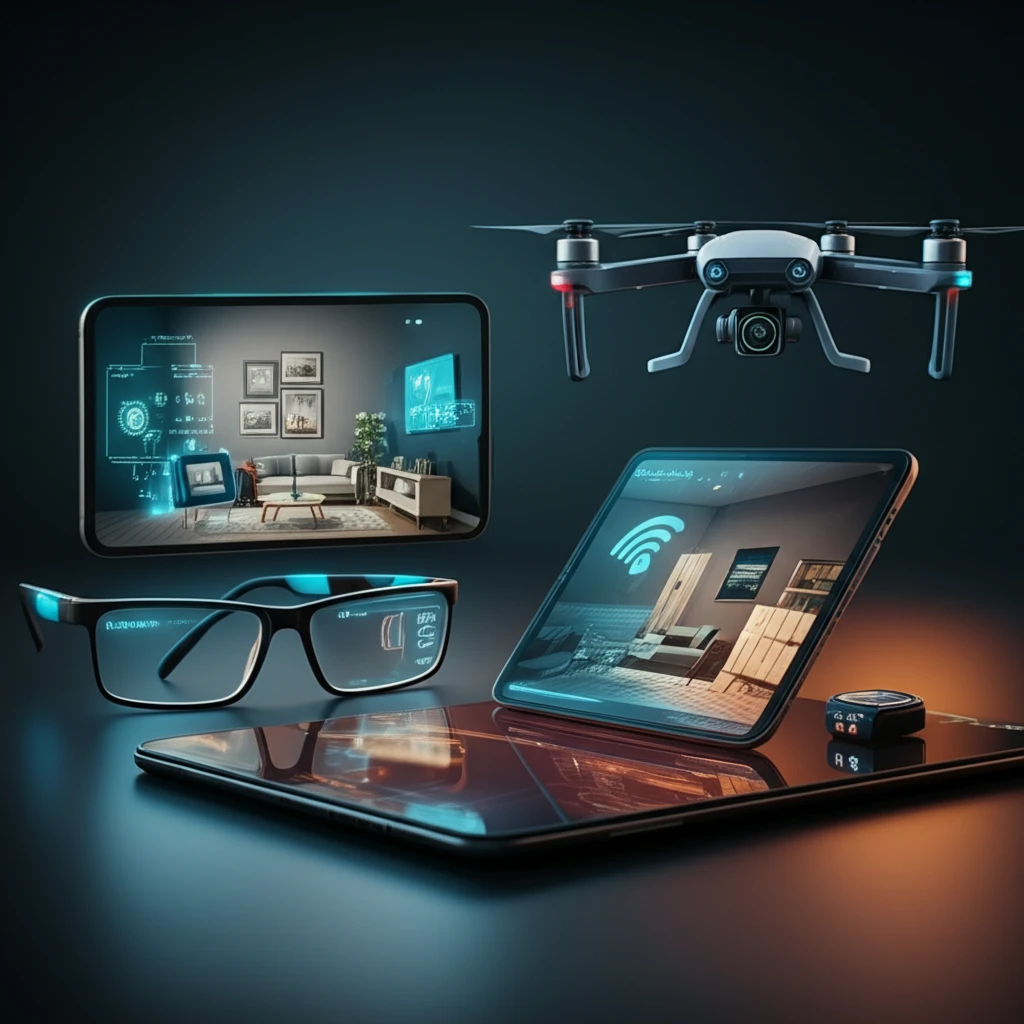
The world of technology never stands still, constantly evolving at an incredible pace. As we look ahead to 2025, a wave of innovation is poised to redefine how we interact with our devices, our homes, and even our own bodies. From smarter AI to more sustainable solutions, the gadgets of tomorrow promise not just convenience, but a truly integrated and personalized experience. Let's dive into the top 10 gadget trends that will shape 2025 and beyond, offering a glimpse into the cutting-edge technology you'll soon be holding in your hands.
Beyond simple voice commands, 2025 will see AI deeply embedded in our gadgets, transforming them into proactive assistants. These devices won't just respond; they'll anticipate your needs, learn your habits, and offer personalized suggestions before you even think to ask. Imagine your smartwatch subtly nudging you about traffic before your morning commute or your smart home system adjusting lighting and temperature based on your mood, learned over time. This hyper-personalization extends to every aspect of your digital life, making tech feel more intuitive and less like a tool.
Example: Next-generation smart wearables that monitor your stress levels and proactively suggest a calming playlist or a breathing exercise.
Practical Tip: When choosing new devices, look for genuine AI integration that offers adaptive learning and privacy controls, rather than just basic automation.
Wearable technology will move beyond step counting and heart rate monitoring. In 2025, expect wearables to offer incredibly detailed biometric data, tailored health insights, and even fashion-forward designs. Smart rings, advanced smartwatches, and even clothing embedded with sensors will provide continuous, non-invasive health monitoring, from glucose levels to sleep patterns and emotional states, integrating seamlessly into your daily life.
Example: Smart glasses that not only offer AR features but also track your hydration and posture, providing real-time feedback.
Practical Tip: Prioritize wearables that offer robust data privacy features and allow you to easily access and understand your personal health data.
While foldable phones have already made an appearance, 2025 will see this technology mature and expand across various device categories. Expect to see more durable foldable smartphones, but also rollable tablets that unfurl into larger screens, and even laptops with expansive, dynamic displays that can be folded for portability. These innovative form factors offer unparalleled flexibility, allowing a single device to serve multiple purposes.
Example: A smartphone that unfolds into a tablet-sized screen, then rolls out further to become a small monitor.
Practical Tip: Early adopters should carefully research the durability and hinge mechanisms of new foldable tech before investing.
As environmental consciousness grows, so does the demand for sustainable gadgets. 2025 will bring a significant push towards eco-friendly tech, with manufacturers focusing on recycled materials, modular designs for easier repairability, and energy-efficient components. Expect to see devices with longer lifespans, reduced e-waste, and even some powered by alternative energy sources like kinetic motion or solar cells.
Example: Modular smartphones where users can easily swap out components like cameras or batteries, extending the device's life.
Practical Tip: Look for products with certifications like EPEAT or Energy Star, and support brands committed to transparency in their supply chain and repair policies.
Augmented Reality (AR), Virtual Reality (VR), and Mixed Reality (MR) will shed their niche status and become integral to everyday experiences. Lightweight, stylish AR glasses will overlay digital information onto the real world, assisting with navigation, shopping, and social interactions. VR will offer more immersive, realistic experiences for entertainment, education, and professional collaboration, moving beyond bulky headsets to more comfortable designs.
Example: AR glasses that display directions on your line of sight, identify plants in your garden, or translate foreign languages in real-time.
Practical Tip: Start experimenting with AR apps on your existing smartphone to get a taste of the technology before committing to dedicated AR/VR hardware.
The evolution of wireless technology continues with 6G on the horizon, promising even faster speeds, lower latency, and ubiquitous connectivity. Alongside this, satellite internet will become more accessible and reliable, ensuring that even remote areas have robust internet access. Your gadgets will be perpetually connected, enabling instantaneous data transfer and real-time interaction regardless of your location, paving the way for truly intelligent environments.
Example: Self-driving vehicles communicating with smart city infrastructure in real-time, facilitated by ultra-low latency 6G networks.
Practical Tip: While 6G is still some time away for widespread consumer use, assess satellite internet options if you live in an area with poor traditional broadband coverage.
Pushing the boundaries of wearables, bio-integrated tech will offer even more intimate insights into our health. Expect to see smart patches for continuous glucose monitoring, advanced skin sensors for real-time hydration and UV exposure, and even non-invasive devices that analyze your breath for early disease detection. These gadgets will provide actionable data, empowering individuals to take a more proactive role in their well-being.
Example: A smart ring that accurately tracks core body temperature for fertility tracking or early illness detection.
Practical Tip: Always remember that while these gadgets provide valuable data, they are not substitutes for professional medical advice. Consult your doctor for any health concerns.
While full-scale quantum computers are still largely for research, their foundational principles will begin to subtly influence consumer tech by 2025. This impact will primarily be seen in enhanced encryption, more efficient data processing for AI algorithms, and potentially breakthroughs in battery technology. Your everyday gadgets will become more secure and perform complex tasks more swiftly, even if you don't directly interact with a quantum device.
Example: Smartphones using quantum-resistant encryption protocols to secure your personal data, anticipating future cyber threats.
Practical Tip: Stay informed about data security practices and regularly update your device's software to benefit from the latest encryption advancements.
The trend towards modularity and customization will grow, allowing users greater control over their devices. Beyond just swappable components, imagine gadgets with customizable designs, programmable interfaces, and open-source hardware that encourages user modification. This movement aims to extend gadget lifespans, reduce waste, and allow for a truly personal tech experience.
Example: Smart home hubs where users can easily add or remove specific sensor modules (e.g., air quality, motion, light) as their needs evolve.
Practical Tip: Explore brands that offer repair guides, replacement parts, and modular designs if you value longevity and customization in your gadgets.
Tired of constantly charging your devices? 2025 will see more gadgets leveraging ambient energy sources. We're talking about devices that can harvest kinetic energy from your movements, draw power from ambient radio frequencies, or even use miniature solar cells to keep themselves topped up. This trend aims to significantly reduce reliance on traditional charging, offering unparalleled convenience and environmental benefits.
Example: A smart remote control that never needs batteries, powering itself entirely through kinetic energy from your hand movements.
Practical Tip: When evaluating new devices, check for features that extend battery life or reduce charging frequency, such as efficient power management or integrated energy harvesting capabilities.
2025 promises to be a thrilling year for gadget enthusiasts. The trends we've explored highlight a future where technology is not just powerful, but also more personal, sustainable, and seamlessly integrated into our lives. From AI that anticipates our needs to devices that power themselves, the next generation of gadgets is set to make our lives smarter, healthier, and more connected than ever before. Stay curious, stay informed, and get ready to embrace the incredible innovations heading our way!
 October 11
Discover the top 10 gadget trends shaping 2025, from hyper-personalized AI and sustainable tech to fashion-integrated devices. Stay ahead with examples & practical tips.
 October 20
Explore the 8 cutting-edge gadget trends shaping 2025, from AI companions and advanced wearables to sustainable tech. Stay ahead with practical tips!
 October 20
Explore the 10 most impactful gadget trends for 2025, from AI integration to sustainable tech. Stay ahead with smart devices, enhanced connectivity & stylish innovations.